Choosing the right storage unit size can feel overwhelming, especially if you’ve never rented one before. With so many unit dimensions, layouts, and facility options available, it’s easy to overestimate or underestimate how much space you actually need. Selecting the correct size is essential—not just for convenience, but also for cost control and long-term flexibility. This guide breaks down the key factors, practical estimation methods, and common mistakes to help you make a confident decision when planning a storage rental.
What Factors Should Influence Your Storage Unit Size Choice?
The first step in choosing the right storage unit is understanding exactly what you plan to store. Start by identifying the type of items involved, such as furniture, appliances, seasonal decorations, boxes, or business inventory.
Bulky items like sofas and mattresses require significantly more space than standard moving boxes. You should also consider how often you’ll need access to your items. If frequent access is important, you’ll want extra room to create walkways inside the unit. A tightly packed unit may save money but can make retrieving items frustrating and time-consuming.
Storage units typically range from small locker-sized spaces to large garage-sized units. A 5×5 unit is ideal for a few boxes or small items, while a 5×10 can accommodate the contents of a small room. Mid-sized units like 10×10 are often suitable for one-bedroom apartments, and larger units such as 10×20 or 10×30 can hold the contents of a multi-bedroom home or commercial equipment. Understanding these general guidelines helps narrow your options early. When exploring a storage rental, ask for size comparisons or visual examples to better understand how much each unit can realistically hold.
It’s easy to focus only on your current storage needs, but thinking ahead can save time and money. If you anticipate adding items later—such as during a move, renovation, or business expansion—choosing a slightly larger unit upfront may be more efficient. Frequent unit changes can lead to higher costs and logistical hassles. Planning for moderate growth ensures your storage solution remains practical over time.
How to Estimate the Space You Require Effectively?
A detailed inventory is one of the most reliable ways to estimate storage space. List every item you plan to store and note approximate dimensions for larger pieces like furniture or equipment. Group smaller items into boxes and estimate how many boxes you’ll need. This process not only clarifies your space requirements but also helps you organize your unit efficiently. Knowing what you’re storing allows for better stacking, zoning, and access planning.
Many storage facilities offer online calculators that estimate the unit size you need based on your inventory. These tools are particularly useful if you’re storing household items from a move or renovation. While calculators provide a helpful baseline, they should be treated as estimates rather than exact answers. Individual packing styles and access needs can influence how much space you actually require during your storage rental.
Storage facility staff are valuable resources when it comes to choosing the right unit size. Experienced professionals have helped countless customers with similar needs and can offer practical guidance based on real-world use. They can also suggest layout tips, stacking strategies, or alternative unit options you may not have considered. Taking advantage of expert advice can prevent costly mistakes and ensure your unit fits your needs comfortably.
What Are the Common Mistakes to Avoid When Renting a Storage Unit?
While budget is an important consideration, selecting the cheapest unit without evaluating size and suitability often leads to problems. A unit that’s too small may require upgrading later, resulting in higher overall costs and wasted effort. Instead, focus on value rather than price alone. A slightly larger or better-configured unit can save money in the long run by reducing the need for multiple moves or additional rentals.
Climate control is often overlooked, but it’s essential for protecting certain items. Electronics, wooden furniture, documents, artwork, and clothing can be damaged by extreme temperatures or humidity. If you’re storing sensitive items for an extended period, a climate-controlled unit may be worth the added cost. Factoring this into your decision ensures your belongings remain in good condition throughout your storage rental.
Accessibility plays a major role in how convenient your storage experience will be. Consider whether you need drive-up access, extended facility hours, or proximity to your home or business. A unit that’s difficult to access can quickly become an inconvenience. Location also matters for security and practicality. Choosing a well-maintained facility in a convenient area reduces stress and makes managing your stored items far easier.
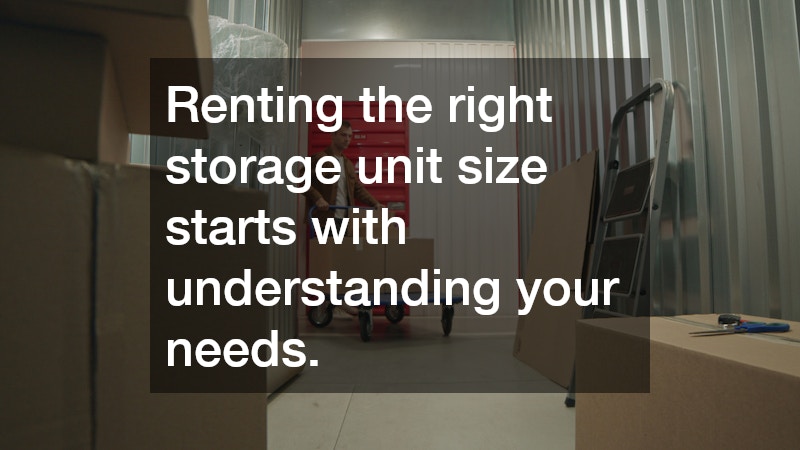
Renting the right storage unit size starts with understanding your needs, accurately estimating space, and thinking ahead. By taking inventory, using estimation tools, and seeking expert advice, you can avoid common mistakes that lead to wasted space or unnecessary costs. A thoughtful approach ensures your storage unit fits both your current and future requirements. With careful planning, your storage solution can be efficient, cost-effective, and tailored to your lifestyle.